
Irish 1000 Guineas: Crossover Form and Why Dual Entries Matter for Bettors
 Available in US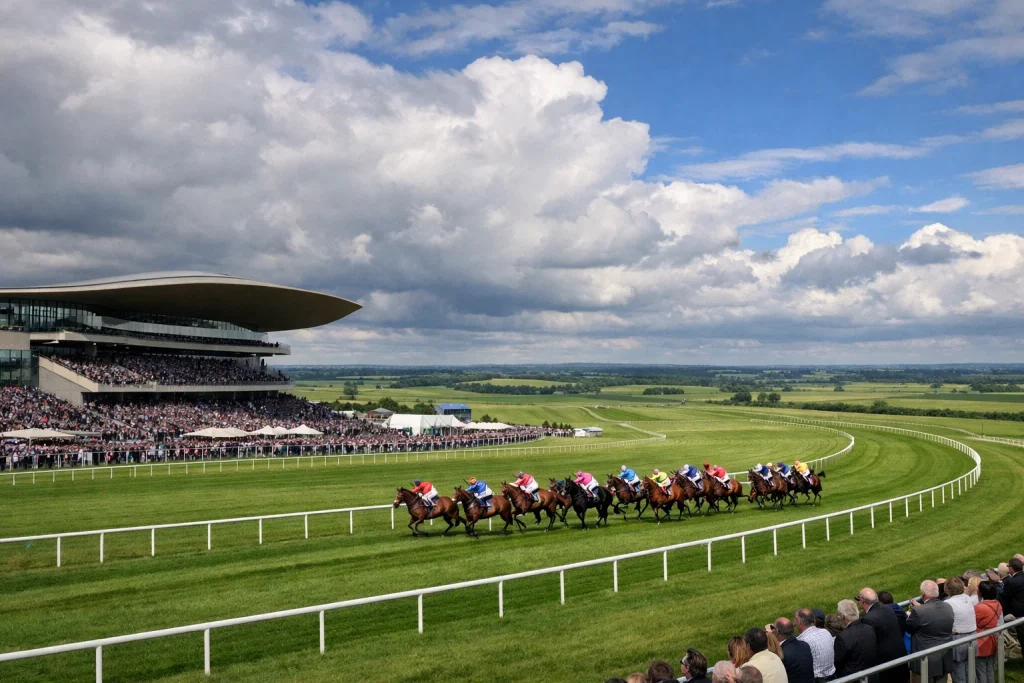
Two 1000 Guineas — One Ante-Post Opportunity
The Irish 1000 Guineas, run at the Curragh three weeks after the Newmarket Classic, is not a standalone race in the betting ecosystem. It is the second act of a two-part fillies’ miling story, and the connection between the two races creates some of the most exploitable ante-post value on the European flat racing calendar. Fillies who ran at Newmarket reappear at the Curragh. Fillies who were aimed at Ireland from the start suddenly face runners whose Newmarket form provides a concrete benchmark. The result is a market that reprices rapidly after the English Classic and rewards bettors who can read the form crossover.
For UK-based bettors, the Irish 1000 Guineas is accessible through the same bookmaker accounts used for Newmarket, and the ante-post market operates on the same principles. The difference is timing: the post-Newmarket repricing window offers a sharper, more predictable opportunity than the broader ante-post cycle.
The wider field of Classics is in the global comparison.
How Newmarket Form Travels to the Curragh
The Curragh and the Rowley Mile are different courses with different characteristics. The Curragh is a right-handed, galloping track with a long straight; the Rowley Mile is dead straight with The Dip and a rising finish. A filly who handles one will not necessarily handle the other. And yet, the historical record shows that Newmarket form translates to the Curragh more reliably than almost any other cross-channel form line in European racing.
The reason is breeding. The dominant sire lines in both the English and Irish 1000 Guineas are the same, because the same breeding operations — Coolmore and Godolphin above all — target both races with their best-bred fillies. Galileo, whose progeny produced four of the five English 1000 Guineas winners between 2016 and 2020, was equally dominant in Ireland, where his daughters won the Irish equivalent with comparable frequency. The breeding lines that excel at a mile on turf are not course-specific; they are distance-specific. A filly bred to be an elite miler will typically handle both Newmarket and the Curragh, provided she has the tactical versatility to adapt to the different course shapes.
The practical implication for bettors is that Newmarket form is a strong predictor for the Irish race. A filly who finished a close third in the English 1000 Guineas, beaten by a specialist miler, may arrive at the Curragh as a genuine favourite if the winner does not travel. Her form is proven at the highest level over the right distance, and the step from Newmarket to the Curragh is a lateral move rather than a step up in class. The market knows this, but the degree of repricing after the English Classic does not always fully reflect the strength of the form crossover.
Dual Entries and Supplementary Entries Explained
Many of the leading 1000 Guineas fillies hold entries in both the English and Irish races. Dual entries are standard practice for the major operations, because they preserve optionality: if a filly misses Newmarket through a setback or a strategic decision, she can still run in Ireland without needing to pay a supplementary entry fee. If she runs well at Newmarket but connections decide the Curragh is a better option for a second run, the Irish entry is already in place.
Supplementary entries add a different dynamic. A filly who was not originally entered in the Irish 1000 Guineas can be supplemented for a fee, usually in the tens of thousands of pounds. When connections pay that fee, it is a strong market signal: they believe the filly has a genuine chance of winning, and they are willing to invest to prove it. For the bettor, a supplementary entry in the Irish 1000 Guineas — particularly from a filly who ran a strong race at Newmarket — is one of the most reliable positive signals in the form book.
The economic scale of Irish racing supports the quality of the race. Ireland’s racing industry generated €2.46 billion in 2026, sustaining more than 30,000 jobs and making it one of the country’s most significant sporting sectors. The Irish 1000 Guineas, as one of the five Irish Classics, attracts a field that reflects this investment: the best Irish-trained fillies supplemented by cross-channel raiders from England and, occasionally, France.
The wider context is set out in our 1000 Guineas betting guide.
Betting the Irish 1000 Guineas After Newmarket
The optimal strategy for the Irish 1000 Guineas begins with the English result. Within 48 hours of the Newmarket Classic, the Irish ante-post market will have repriced. The goal is to identify mispriced runners before the market settles.
The three most common value angles are these. First, the placed Newmarket runner who is confirmed for Ireland. If the second or third from the English race is supplemented or confirmed for the Curragh, her form is the strongest in the race and her price should reflect that. If the market is slow to adjust — perhaps because the English winner is dominating the narrative — there is a window to back the placed runner at a price that underestimates her ability.
Second, the Newmarket non-runner. A filly who missed the English Classic because of ground, a minor setback, or a deliberate plan to target Ireland exclusively may arrive at the Curragh fresh and well prepared. If she has strong trial form and her absence from Newmarket was strategic rather than involuntary, the market may underestimate her because it lacks a direct English Classic form line to price against. These fillies are often available at each-way prices that reward the bettor who has tracked their preparation through the spring.
Third, the emerging improver. A filly from an Irish yard who did not contest the English race but who has been progressive through her spring campaign may arrive at the Curragh at a price that does not fully reflect her trajectory. If her trial form suggests she is improving toward a peak performance, and if the fillies returning from Newmarket are coming back after just three weeks — a tight turnaround that does not suit every horse — the fresh Irish filly has a tactical and physical advantage that the market may not adequately price.
The three-week gap between Newmarket and the Curragh is the defining feature of this betting opportunity. It is long enough for new information to emerge but short enough that the Newmarket form remains the most relevant data point. Bettors who act within the first 48 hours after the English Classic — before the Irish market settles into its final shape — consistently find the widest value.
