
1000 Guineas Tips: A Data-Driven Approach to Picking Winners
 Available in US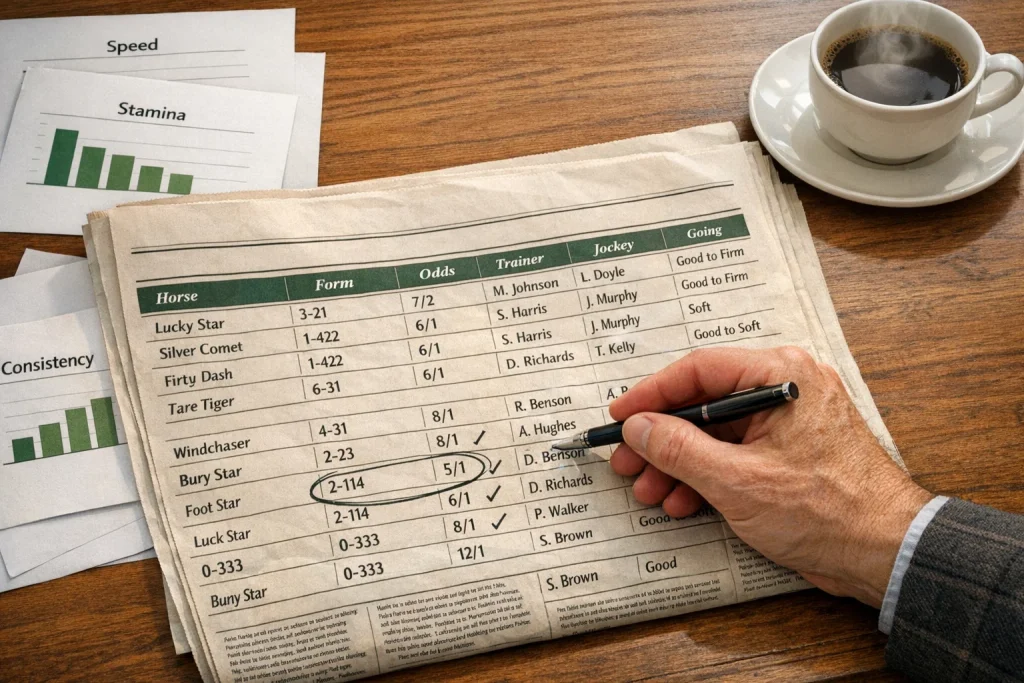
Why Most 1000 Guineas Tips Miss the Point
The internet overflows with 1000 Guineas tips every April. Pundits name their fancies, tipsters post selections, and social media buzzes with confident assertions about which filly will land the fillies’ Classic. Most of these tips share a common flaw: they start with conclusions rather than processes. A name is given, sometimes with a sentence of justification, and that is meant to be enough. It rarely is.
A data-driven approach to 1000 Guineas tips begins elsewhere. Instead of declaring a winner, it establishes criteria. Instead of following the favourite, it asks what patterns have historically predicted success. Instead of relying on narrative, it demands evidence. This method is slower and less exciting than a confident selection shouted from a headline. It is also more likely to produce value over time.
The 1000 Guineas rewards analytical patience. Fields are competitive, juvenile form is difficult to parse, and the Rowley Mile’s straight course neutralises some of the tactical advantages that skew results at other tracks. The filly who deserves to be favourite does not always win — the 2026 running was a textbook example. The filly at longer odds sometimes does. The difference between profitable punting and expensive guessing lies in the framework you apply before placing a single bet. This article builds that framework from the ground up, updated with lessons from the most recent Classic.
The filtering method is set out in the form guide.
The Selection Framework: Five Filters for 1000 Guineas Contenders
Building a selection framework means establishing filters that narrow the field before subjective judgment enters the process. For the 1000 Guineas, five filters consistently separate serious contenders from hopeful entries. Apply them in sequence to reduce a field of fifteen or more to a shortlist of four or five.
Filter One: Newmarket Course Experience
The Rowley Mile is unlike any other British racecourse. Its straight one-mile configuration, gradual undulations, and notorious Dip in the final furlong demand familiarity. A filly who has never raced at Newmarket faces a learning curve that her rivals may not. Data from TheStatsDontLie shows that ten of the last thirteen winners had prior Newmarket form, whether from two-year-old races or spring trials. The 2026 winner, True Love, reinforced this pattern: she had won the Cheveley Park Stakes over six furlongs at Newmarket as a juvenile, and that course knowledge proved decisive when she powered through the Dip to score at 5/1. The exceptions are rare enough to prove the rule. First filter: has she run at Newmarket before, and how did she handle it?
Filter Two: Group-Level Form at a Mile
The 1000 Guineas is a Group 1 race over one mile. Fillies who have not demonstrated competence at this level and distance are speculative propositions. The ideal contender has won or placed in a Group 2 or Group 1 over seven furlongs to a mile as a juvenile, or has returned with a trial victory that confirms her stamina. Maidens and handicappers occasionally win Classics, but they require exceptional circumstances.
The 2026 result adds a nuance to this filter. True Love was by No Nay Never — a sprint sire — and her Group 1 win came in the six-furlong Cheveley Park Stakes. On paper, she was a doubtful stayer. But her subsequent victory in the Group 3 Priory Belle Stakes over seven furlongs at Leopardstown in April provided the incremental evidence that she was stretching towards a mile. She had not yet won at the trip, but she had shown progressive stamina. The lesson: Group-level form matters, but the trajectory of a filly’s development can matter as much as her established resume. Second filter: does she have Group-level evidence that she handles the trip — or is she moving convincingly towards it?
Filter Three: Established Juvenile Form
The 1000 Guineas is the first Classic of the flat season. Most contenders ran as two-year-olds, building a body of form that can be assessed. Late developers who appear suddenly in spring without a juvenile campaign are not impossible winners, but they lack the track record that serious analysis requires. The stronger the two-year-old form, the higher the confidence.
The 2026 favourite, Precise, was the poster filly for this filter. She had ended her juvenile season with back-to-back Group 1 wins, including the Fillies’ Mile over the Guineas course and distance. Her two-year-old form was impeccable. But she carried an interrupted preparation into the Classic — a temperature setback a month before the race meant she was short of peak fitness — and she finished seventh at 9/5. Strong juvenile form is necessary but not sufficient. Third filter: did she prove herself as a juvenile, and against what level of competition — and has her preparation since been clean?
Filter Four: Trial Performance
Trial races exist for a reason. The Fillies’ Mile at Newmarket, the Nell Gwyn Stakes, and the Fred Darling Stakes serve as dress rehearsals for the Classic. According to OLBG, six of the last eleven 1000 Guineas winners had the Fillies’ Mile among their last three starts before the Classic. The Nell Gwyn and Fred Darling add further winners in the same period.
The 2026 running tested these correlations from an unusual angle. Precise had won the Fillies’ Mile but lost the Guineas. True Love bypassed all the traditional Newmarket trials, instead winning the Priory Belle Stakes at Leopardstown — a less fashionable but equally informative prep. Meanwhile, Azleet, who won the Nell Gwyn Stakes at Newmarket in April, missed the break in the Guineas and finished last at 50/1. The pattern held in aggregate but broke down at the individual level: trials are informative, but no single trial is predictive on its own. A filly who skips these trials may have good reasons — preservation for the big day, preference for a different route — but she loses the opportunity to demonstrate current wellbeing. Fourth filter: how did she perform in her most recent trial, and does it confirm her Classic credentials — or if she bypassed the standard trials, what alternative evidence supports her readiness?
Filter Five: Trainer and Jockey Track Record
Certain trainers and jockeys dominate this race. Their presence on a filly’s entry is not a guarantee, but it is a signal of serious intent and proven expertise. Aidan O’Brien has now won the 1000 Guineas eight times — including the 2026 running with True Love — moving him within one of Robert Robson’s all-time record of nine. William Buick and Ryan Moore have ridden multiple winners. Wayne Lordan has won the race three times, all on O’Brien-trained fillies: Winter (2017), Hermosa (2019), and True Love (2026). When a leading operation targets this race with a filly who passes the first four filters, attention is warranted. Fifth filter: is she trained and ridden by connections with a record of success in this race?
Each filter narrows the field. By the time you reach the end, only a handful of fillies meet all criteria. Some years, the favourite ticks every box and deserves her price. Other years, a filly at double figures passes every filter while the favourite fails one or two — as True Love did in 2026 at 5/1, second string on paper but first under the framework. The framework does not pick winners; it identifies where to focus your analysis. That focus is where value lives.
Trainer and Jockey Patterns That Matter
Trainer statistics in the 1000 Guineas reveal a hierarchy that shapes the market year after year. Aidan O’Brien, operating from Ballydoyle in County Tipperary, has won this race eight times and the 2000 Guineas ten times. His dominance extends across the entire British and Irish Classic programme, with over 55 Irish Classic victories at his peak. When O’Brien declares a filly for the 1000 Guineas, bookmakers react immediately. His presence guarantees scrutiny.
O’Brien’s approach to miling fillies reflects a broader philosophy he has articulated over the years. “A miler is a sprinter who stays,” he once observed, summarising the blend of speed and stamina that defines a successful Guineas horse. True Love’s 2026 victory embodied this maxim: a Queen Mary winner at Royal Ascot as a two-year-old, a Cheveley Park conqueror over six furlongs, she proved that raw speed allied to a relaxed temperament could carry a filly through the Rowley Mile. O’Brien acknowledged after the race that he had been uncertain whether she would stay the trip: “You couldn’t be sure she was going to get a mile, she’s a Queen Mary winner and it’s very unusual for a Queen Mary winner to get a mile.” But her relaxation in the Priory Belle Stakes at Leopardstown over seven furlongs gave him the confidence to try.
The 2026 race also highlighted a tactical pattern that has served O’Brien repeatedly: running two fillies with contrasting profiles. Precise was the proven miler with the best juvenile form; True Love was the speedier, race-fitter alternative. When Precise’s preparation was disrupted, True Love’s fitness edge became the decisive factor. Understanding which of O’Brien’s multiple entries is the genuine first string — and which is the insurance policy — is one of the hardest but most valuable skills in 1000 Guineas analysis.
Beyond Ballydoyle, other trainers warrant respect. John and Thady Gosden have trained multiple Classic winners from their Newmarket base, with the advantage of home-course familiarity. Charlie Appleby’s Godolphin operation has produced recent 1000 Guineas success — Desert Flower in 2025 gave Godolphin the Guineas double — benefiting from deep resources and patient development of juvenile fillies through the autumn. Karl Burke, who trained the 2026 runner-up Evolutionist at 16/1 and the well-fancied Venetian Sun at 9/2, has established himself as a trainer capable of producing fillies competitive at the highest level. Charlie Johnston, son of the legendary Mark Johnston, saddled the 33/1 third Venetian Lace — a reminder that the next generation of training talent is making its mark in Classics. William Haggas, Ralph Beckett, and Andrew Balding remain capable of springing surprises with well-prepared contenders.
Jockey bookings add another data layer. Ryan Moore rides first call for O’Brien and has an exceptional record across all Classics. William Buick is the retained jockey for Godolphin, often paired with Appleby’s leading hopes. Wayne Lordan’s three 1000 Guineas wins — all for O’Brien, all at double-figure or near-double-figure odds — demonstrate that the stable’s second-string rider can be the value angle in this race. When a leading jockey commits to a particular filly in the weeks before the race, that booking carries information. It signals stable confidence and suggests the filly is considered ready to run her race.
Conversely, jockey switches or late replacements can indicate problems — or opportunities. The 2026 Irish 1000 Guineas provided a vivid illustration: Ryan Moore switched from Precise to True Love at the Curragh, leaving Wayne Lordan to ride Precise. Precise, back to her best after the Newmarket setback, powered clear to beat her stablemate by two and a half lengths. The jockey switch carried information, but not the information casual punters assumed. Stable intentions are not always what they seem.
The breeding angle intersects with trainer patterns. Galileo sired four of five 1000 Guineas winners between 2016 and 2020, a dominance that reflected both his genetic quality and the concentration of his offspring in O’Brien’s yard. With Galileo’s death in 2021, that sire line’s influence is gradually waning as his last crops age out of Classic contention. True Love’s victory in 2026 was by No Nay Never — a very different sire profile, built on speed rather than stamina. The lesson for 2027 and beyond: do not assume the same bloodlines will dominate. Trainers who handle the best-bred fillies gain an inherent edge, but the definition of “best-bred” shifts with the stallion market. Assessing trainer form without considering the quality of horses in their care produces misleading conclusions.
When filtering contenders by trainer and jockey, look for convergence. A filly trained by a Classic specialist, ridden by a proven big-race jockey, and entered with clear intent is not guaranteed to win. But she has passed an important test. If she also clears the earlier filters — Newmarket experience, Group form, trial performance — she belongs on your shortlist. Trainer and jockey patterns do not override form. They confirm it.
The full picture is in our 1000 Guineas betting guide.
Form Lines and Trial Races: What the Data Says
Form analysis for the 1000 Guineas begins with the races that feed into it. Certain contests produce disproportionate numbers of Classic winners, and understanding which form lines matter most is essential to building a sensible shortlist. The challenge, as the 2026 running demonstrated, is that juvenile form can be misleading — fillies develop at different rates, and a winning two-year-old is not always a winning three-year-old.
The Fillies’ Mile at Newmarket stands as the most predictive trial. Run over a mile at headquarters in October, it tests qualities directly relevant to the Classic: stamina, composure, and the ability to handle a competitive Group 1 field. According to OLBG, six of the last eleven 1000 Guineas winners contested the Fillies’ Mile among their last three starts. The 2026 running, however, provided a cautionary footnote: Precise won the Fillies’ Mile but finished only seventh in the Guineas, undone not by a lack of ability but by an interrupted preparation. The correlation is not perfect — it never was — but it remains strong enough to demand respect. A filly who wins or places in the Fillies’ Mile enters the Classic with proven credentials. But those credentials must be validated by a clean spring preparation.
The Nell Gwyn Stakes, run at Newmarket in April, serves a different function. It is a trial in the truest sense: a seven-furlong Group 3 designed to put fillies through a competitive workout before the Classic. Winners of the Nell Gwyn often go on to run well in the 1000 Guineas, though the correlation is weaker than for the Fillies’ Mile. Four Nell Gwyn winners have also won the 1000 Guineas over the last decade. The 2026 Nell Gwyn winner, Azleet, offered a counter-example: she missed the break in the Guineas and finished last at 50/1. The race offers current form — evidence that a filly has trained on through the winter and is ready to compete at the highest level — but it does not guarantee Guineas success.
The Fred Darling Stakes at Newbury provides a comparable stepping stone. Run at the same seven-furlong distance as the Nell Gwyn, it attracts fillies from a broader range of stables, including those who prefer to prepare away from Newmarket. A strong Fred Darling performance signals fitness and wellbeing, though the track differences — Newbury’s galloping course versus Newmarket’s straight mile — mean the form requires adjustment.
Beyond these trials, True Love’s 2026 success highlighted an alternative path: the Leopardstown route. Her victory in the Group 3 Priory Belle Stakes over seven furlongs on soft ground in April gave her a fitness edge over Newmarket-trained fillies who had not yet run. For punters building shortlists in 2027, the lesson is to widen the net beyond British trials. Irish and French prep races can produce fillies who arrive at Newmarket sharper than their domestic rivals.
Specific race-to-race form lines deserve examination. Did the filly beat subsequent Group winners as a juvenile? Did her losing efforts come against established stars, or did she simply fail to deliver? The depth of a form line matters. A second place behind an exceptional rival may be more valuable than a narrow win over moderate opposition. In 2026, Evolutionist’s third-place finish behind Precise in the Fillies’ Mile proved a stronger Guineas pointer than Precise’s victory itself: Evolutionist ran on to finish second at 16/1, while Precise faded to seventh. Assessing form requires context, not just results.
Timeform ratings and Racing Post Ratings offer standardised measures that allow comparison across different races and tracks. A filly rated 110+ by these sources has demonstrated a level of performance consistent with Classic contention. Ratings below 105 suggest she is stepping up significantly in class, which does not rule out success but reduces probability. Using ratings alongside raw form smooths out the noise that comes from varying field quality and race conditions.
One pattern worth noting is the lightly raced improver. Occasionally, a filly with only two or three career starts enters the 1000 Guineas with undisclosed potential. These runners are difficult to assess because the sample size is too small for confidence. They can win — Billesdon Brook in 2018 had just three prior starts — but backing them requires accepting higher variance. Charlie Appleby’s Abashiri, fifth in the 2026 running at 8/1, had raced only once as a juvenile. She ran with credit but lacked the hardened form to challenge the winner. For most punters, form lines with more data points offer safer ground.
The conclusion is straightforward. Prioritise fillies with strong performances in the Fillies’ Mile, Nell Gwyn, Fred Darling, or equivalent Irish and European trials. Check that their form figures include wins or places against subsequent Group winners. Verify their ratings meet Classic standard. Dismiss contenders whose form lacks these markers unless other factors — a progressive trial performance, elite connections, a fitness edge — provide compelling justification. Form is the foundation. Everything else builds on it.
Value Picks vs Favourites: Where the Edge Lies
The relationship between favourites and value in the 1000 Guineas challenges simple assumptions. On one hand, the market favourite represents the consensus view of thousands of pounds in circulation, filtered through bookmaker expertise. On the other hand, data shows that favourites in this race underperform their prices more often than casual bettors expect. The 2026 running was a case study in this dynamic: Precise, sent off at 9/5 as the clear favourite on the strength of the best juvenile form in the field, finished seventh. True Love, at 5/1, won. Navigating between these realities is where skilful punting produces returns.
Historical strike rates provide the starting point. Across the entire history of the 1000 Guineas, favourites have won approximately 38.5% of the time, according to analysis by How They Run. That figure sounds reasonable until you consider the implied probability of a typical favourite’s price. A 2/1 favourite implies a 33% chance; an 11/8 shot implies 42%. If favourites are winning at 38.5% but typically priced around evens to 6/4, they are returning less than their implied probability suggests. In betting terms, this represents poor value over the long run.
The recent record sharpens this concern. Over the last thirteen runnings of the 1000 Guineas, only two market favourites have won — a strike rate of just 15.4%, far below the historical average. The 2026 favourite, Precise, was the latest to fall: sent off at 9/5 with the best juvenile form in the field, she finished seventh after an interrupted preparation. This collapse in favourite reliability may reflect increased field depth, smarter training of second-tier fillies, or simple variance. Whatever the cause, the pattern suggests that blindly backing the jolly is not a path to profit.
Value, by contrast, lies where the market underestimates a filly’s chances. True Love in 2026 was a textbook value winner. She was O’Brien’s second string behind the favourite, her sire profile suggested she might not stay a mile, and she had taken an unconventional trial route through Leopardstown. All of these factors kept her price at 5/1 — generous odds for a Group 1-winning filly with proven Newmarket form, a top trainer, and a jockey who had already won the race twice. Bettors who applied the selection framework rather than following the market leader had every reason to back her.
Value can emerge for several reasons. A lightly raced filly may not have advertised her ability widely enough to attract support. A filly trained outside the dominant stables may be overlooked despite strong form. A filly returning from a setback may drift in the market as punters fear the unknown. In each case, the price is longer than the filly’s actual chances warrant. Finding these mispriced runners is the core skill of profitable betting.
One method for identifying value is to apply the selection framework and compare your assessment against market prices. If a filly passes every filter — Newmarket experience, Group form, strong trial, elite trainer and jockey — but is trading at 10/1 or longer, the market may be wrong. Of course, you must also ask why the market disagrees. Perhaps there is information you have missed, such as a negative veterinary report or stable whispers about temperament. Value betting requires confidence, but not arrogance.
Each-way betting offers another avenue for value extraction. In a race where favourites fail nearly 85% of the time over the recent sample, the place portion of an each-way bet gains importance. The 2026 running was a striking example: the first three home were 5/1, 16/1, and 33/1. An each-way bet on Venetian Lace at 33/1 returned a handsome profit for the place alone, without requiring the filly to win. The mathematics depend on field size and place terms, but the principle holds: each-way betting spreads risk and captures value from fillies who run well without winning.
The final consideration is stake allocation. Backing a filly at 8/1 who you believe should be 5/1 represents value, but only if your assessment is accurate. Overconfidence leads to overexposure. Profitable punters size their bets relative to the edge they perceive and the confidence they hold. A strong conviction on a value pick justifies a larger stake; a speculative punt on a potential improver justifies a smaller one. Bankroll discipline separates those who profit over seasons from those who merely remember their winners.
Value and favourites are not opposites. Sometimes the favourite is the value bet, underrated by a market that overestimates a rival. More often, value hides further down the market, waiting for punters who ask the right questions. The 1000 Guineas, with its volatile favourite performance, rewards those who look beyond the obvious.
How to Build a Tips Shortlist Year After Year
A repeatable process matters more than a single winning tip. The 1000 Guineas comes around every May, and the punter who builds a systematic shortlist method will outperform the punter who reacts to headlines. Here is a practical workflow that can be applied annually, regardless of the specific contenders.
Start in October. After the Fillies’ Mile, note the first four finishers. These fillies have demonstrated mile form at Newmarket against Group 1 competition. Add them to a watchlist. In 2026, Precise won the Fillies’ Mile from Venetian Lace and Evolutionist; all three went on to run in the Guineas, and two of the three finished in the first two. Over the winter, track news about their well-being, training progress, and spring targets. Most will be entered in the 1000 Guineas; some will drop out due to injury or alternative targets. By February, your watchlist should contain six to ten names.
In April, review trial results. Cross-reference your watchlist against performances in the Nell Gwyn, Fred Darling, and any other relevant prep races — including Irish trials such as the Priory Belle Stakes at Leopardstown, which produced the 2026 winner. Fillies who run well in these trials confirm their Classic credentials; those who disappoint raise questions. Add any new names who emerge with strong trial victories, but apply the same filters: Newmarket experience, Group form, stamina evidence. In 2026, the Nell Gwyn winner Azleet failed to reproduce her trial form in the Classic, while the Leopardstown winner True Love improved. The lesson: weight trials by their relevance to the Guineas, not by their prestige alone. By the week before the race, your shortlist should be down to four or five serious contenders.
Once the declarations are confirmed, compare your shortlist against the market. Check odds at multiple bookmakers and calculate implied probabilities. Identify which fillies are shorter than your assessment suggests (overbet by the market) and which are longer (potential value). If your top-rated filly is trading at 6/1 but you believe she has a 25% chance — equivalent to 3/1 — she represents value. If she is trading at 5/2 but you rate her a 20% chance — equivalent to 4/1 — she is overpriced and should be avoided or bet against.
In 2026, True Love was trading at 5/1 despite possessing Group 1 form at Newmarket, a proven Guineas jockey, and a fitness edge from her Leopardstown prep. A framework-driven punter who rated her a 25% chance (fair odds of 3/1) would have identified her as a clear value bet. The market was anchored to Precise’s superior juvenile form and discounted True Love’s readiness. That gap between perception and probability is where profit lives.
On race day, make your final adjustments. Check the going report, as soft ground can change the complexion of the race. Review jockey bookings for late changes. Monitor the betting exchanges for significant market moves that might indicate late intelligence. In 2026, the fact that True Love arrived race-fit while Precise had missed work was known to close followers but not fully reflected in the odds. Then commit to your selections. A shortlist built over seven months carries more weight than a tip grabbed from a headline that morning.
After the race, review your process. Did your filters correctly identify the winner, or at least place fillies? If not, examine where the framework failed. Was there a trial you undervalued? A form line you misread? A trainer angle you missed? In 2026, a punter whose framework dismissed True Love because she bypassed the traditional British trials and had a sprinter’s pedigree would have missed the winner. The framework should evolve: add the Leopardstown route as a recognised trial path; weight fitness edge more heavily; treat sire stamina as a factor to assess, not a disqualifier. The point is not to achieve perfection but to improve iteratively. Each year’s analysis feeds into the next, building institutional knowledge that compounds over time.
This method is not glamorous. It requires attention in October, patience through the winter, and discipline in April. Most punters will not follow it. That reluctance creates the opportunity. A data-driven approach to 1000 Guineas tips separates the serious from the casual. It turns a single race into an annual project, and an annual project into a sustainable edge.
