
Guineas Festival at Newmarket: Tickets, Travel, and Raceday Guide
 Available in US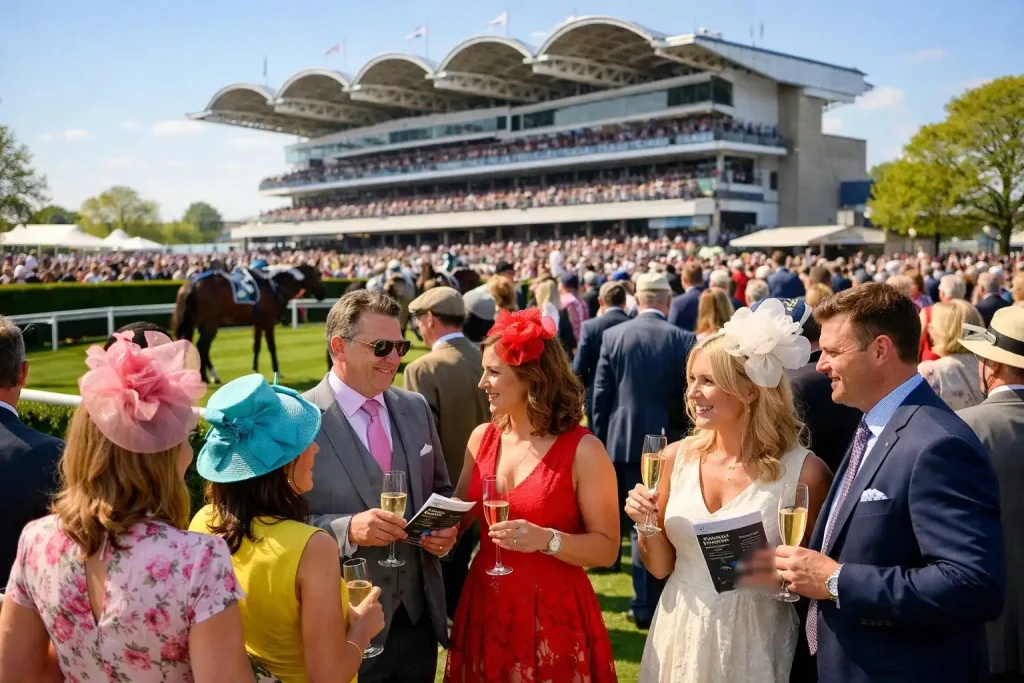
What Arriving at Newmarket for the 1000 Guineas Feels Like
The approach to Newmarket on Guineas day tells you everything about what kind of event this is. The town, which has been the headquarters of British horse racing since the 17th century, comes alive for the Guineas Festival in a way that no other meeting quite matches. The high street fills with racegoers, the training yards along the Bury Road are buzzing with activity, and the wide expanse of heath that surrounds the course — where horses have been trained for centuries — provides a backdrop that connects the modern spectacle to racing’s deep history.
For the first-time visitor, the Guineas Festival combines the sporting intensity of a major Classic with the social atmosphere of a spring weekend in rural Suffolk. Getting the logistics right — tickets, transport, enclosure choice, and on-course betting — means you can focus on the racing rather than fighting the infrastructure.
The course itself is described in the Rowley Mile guide.
Tickets, Enclosures, and Hospitality Options
The Rowley Mile offers three main enclosure levels for the Guineas Festival. The Premier Enclosure is the top tier, positioned closest to the winning post and offering the best views of the final furlong. It includes access to the parade ring, the pre-parade ring, and the winners’ enclosure, as well as a range of bars and food outlets. Tickets for the Premier Enclosure on 1000 Guineas day are typically priced between £40 and £60, depending on how early you book and whether the festival is sold out. Advance booking is strongly recommended — Guineas day can sell out, particularly in years where a high-profile favourite attracts casual racegoers as well as regulars.
The Grandstand and Paddock Enclosure offers a mid-range option with good views and access to the main betting ring. Prices are lower, usually in the £20 to £35 range, and the atmosphere tends to be more relaxed than the Premier section. For bettors who prioritise access to the on-course bookmakers over proximity to the parade ring, this enclosure offers excellent value.
Hospitality packages are available for those who want a full-service experience, including reserved seating, meals, and drinks. These range from around £150 to several hundred pounds depending on the level of service. The demand for these packages reflects the broader trend in UK racing attendance. The BHA’s 2026 Racing Report recorded total UK racecourse attendance of 5.031 million — the first time the figure had exceeded 5 million since 2019 — and Premier meetings like the Guineas Festival account for a disproportionate share of that figure. On big race days, the demand for premium access outstrips supply, which is why early booking matters.
Under-18s are typically admitted free with a paying adult, and specific family areas are sometimes designated within the Grandstand enclosure. The Jockey Club’s website provides the most current pricing, enclosure maps, and availability for each year’s festival, and is worth checking several weeks in advance.
Getting There: Train, Car, and Parking
Newmarket is in west Suffolk, roughly 65 miles north-east of London. By car, the journey from central London takes approximately 90 minutes via the M11 and A11, depending on traffic. On Guineas day, the roads around Newmarket become congested from mid-morning, so arriving early is advisable. The racecourse offers on-site parking, and additional overflow parking is available in fields adjacent to the course. Charges vary by enclosure, but expect to pay between £5 and £15 depending on proximity.
By train, the nearest station is Newmarket, served by Greater Anglia from Cambridge (approximately 20 minutes) and London Liverpool Street (approximately 90 minutes with a change at Cambridge). On Guineas day, additional shuttle buses typically run between the station and the racecourse, a distance of about a mile. The train is the most practical option if you plan to have a drink during the day, and the Cambridge connection provides a reliable service with trains every 30 to 60 minutes.
Coach services are occasionally arranged by the racecourse or by independent operators, particularly from London and the Midlands. These tend to offer a return journey for a fixed price and take the hassle of driving and parking out of the equation, though they require you to leave on the operator’s schedule rather than your own.
For those travelling from further afield, Newmarket has a reasonable selection of hotels, bed-and-breakfasts, and pub accommodation, though these fill up quickly for the Guineas Festival. Cambridge, which is 15 miles south, offers a wider range of options and a direct rail link to the racecourse. Booking accommodation early — ideally several weeks before the festival — is essential if you plan to stay overnight and attend both the Saturday and Sunday cards.
The wider context is set out in our 1000 Guineas betting guide.
Raceday Betting On-Course vs Online
The Guineas Festival offers a choice that most modern bettors rarely face: on-course bookmakers or the phone in your pocket. Both have advantages, and the experienced racegoer uses both.
On-course bookmakers line the betting ring in the Grandstand and Premier enclosures. They offer prices that are set independently of the exchanges and online firms, and on occasion they offer better value — particularly on less fancied runners where the on-course market is thinner and prices are wider. Betting on-course also carries a romantic appeal that the phone lacks: the boards, the tic-tac men (where they survive), and the atmosphere of the ring on a Classic day are part of the raceday experience. The broader context of on-course betting is one of decline. Off-course turnover on horse racing stood at £3.33 billion as of March 2023, 42% below the 2009 level, reflecting the long-term shift from physical to digital betting. On-course bookmakers represent a fraction of overall market turnover, but on big days at Newmarket they remain a viable and sometimes superior option.
Online betting via your phone is faster, more convenient, and offers access to best odds guaranteed, enhanced each-way terms, and in-play markets that the on-course ring does not provide. For the serious bettor, the phone is the primary tool. But there is value in checking the on-course boards before committing, particularly for each-way bets where an on-course bookmaker may offer an extra place or a slightly better price on a mid-range runner.
The ideal approach is pragmatic: use online accounts for ante-post and morning bets, check the on-course ring for each race, and place the bet where the value is best. The Guineas Festival is one of the few meetings where that comparison is genuinely worth making on every race.
