
Beginner’s Guide to 1000 Guineas Betting: Glossary, Basics, and First Steps
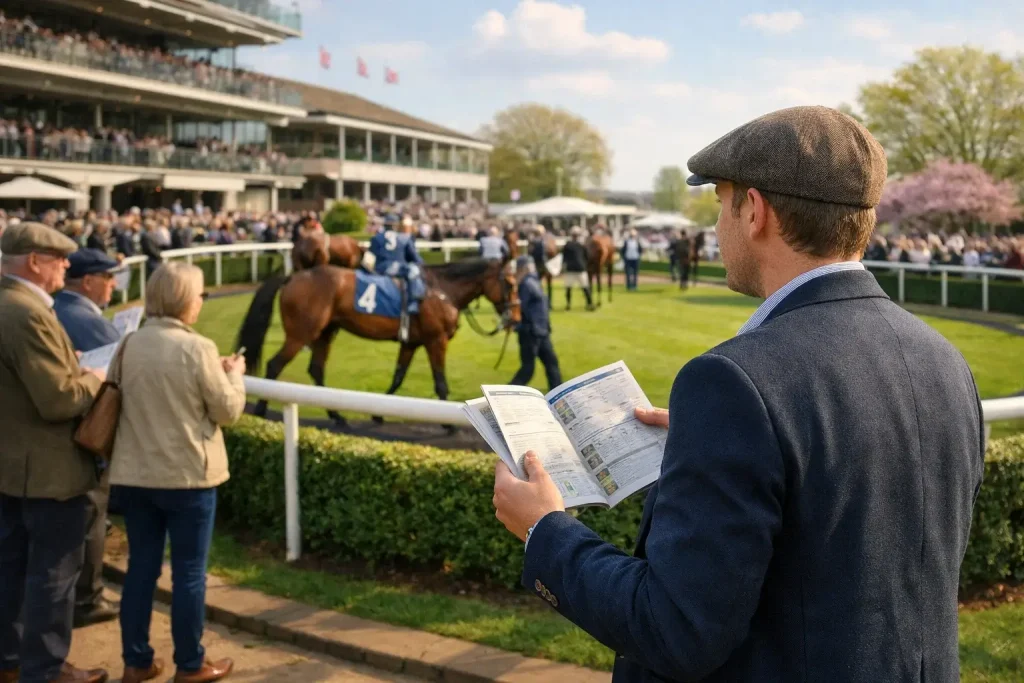
Your First 1000 Guineas Bet — Where to Start
If the 1000 Guineas is the first horse race you are thinking about betting on, you have picked one of the best possible starting points. It is a major event on the British sporting calendar, broadcast live on free-to-air television, covered extensively by the racing press, and discussed by pundits who break down every angle of the race in the days before the off. The market is liquid, the information is abundant, and the race itself is exciting enough to justify the attention even without a bet.
But horse racing has its own language, its own conventions, and its own logic. If you have never placed a bet on a horse race before, the jargon can be intimidating. This guide strips the 1000 Guineas down to its essentials: what the race is, what the key terms mean, and how to place your first bet with enough understanding to make it a considered decision rather than a lucky dip.
What Is the 1000 Guineas and Why Does It Matter?
The 1000 Guineas is one of five British Classic races, contested every year since 1814. It is a Group 1 flat race for three-year-old fillies, run over one mile at Newmarket’s Rowley Mile course on the first Sunday of May. It is the fillies’ equivalent of the 2000 Guineas, which takes place the day before with colts. Together, the two races form the centrepiece of the Guineas Festival — one of the most prestigious weekends in the British racing calendar.
The race matters because it identifies the best miling filly of her generation. Winning the 1000 Guineas transforms a horse’s career and her value as a future broodmare, which is why the top owners, trainers, and jockeys in European racing target it with their best prospects. The field typically consists of 10 to 16 runners, drawn from the most elite yards in Britain and Ireland.
The scale of the sport surrounding the race is significant. The BHA’s 2026 Racing Report recorded that total UK racecourse attendance reached 5.031 million — the first time that figure had exceeded 5 million since 2019. The Guineas Festival is among the meetings that contribute most heavily to that total, attracting racegoers and television viewers who engage with the sport at its highest level. As William Buick, jockey of the 2026 winner Desert Flower, observed after his victory, the quality of the fillies at this level represents the very best of flat racing. It is a race where class and ability are tested in the most demanding setting the sport can offer.
Essential Betting Terms: A Working Glossary
Odds represent the bookmaker’s assessment of how likely a horse is to win. In British racing, odds are expressed as fractions: 5/1 means you win five pounds for every one pound you stake (plus your stake back). 2/1 means you win two for every one. Evens (1/1) means you double your money. The shorter the odds, the more the bookmaker expects the horse to win.
Favourite is the horse with the shortest odds in the market — the one the bookmaker considers most likely to win. In the 1000 Guineas, the favourite has a historically inconsistent record, winning roughly 38% of all renewals and far fewer in recent years.
Each-way is a bet that covers both a win and a place finish. It is effectively two bets: one on the horse to win, one on the horse to finish in the first three (or four, depending on the number of runners). If the horse wins, both bets pay out. If the horse finishes in the places but does not win, the place portion pays out at a fraction of the win odds, typically one quarter. An each-way bet costs double the stated stake: a £10 each-way bet costs £20.
Ante-post refers to bets placed before the day of the race, often weeks or months in advance. Ante-post odds are typically more generous because they carry the risk that the horse might not run. If your selection does not start the race, your stake is lost unless you have taken Non-Runner No Bet (NRNB) terms.
Starting Price (SP) is the official odds at the moment the race begins. It is determined by the on-course betting market and represents the final price at which the horse was being traded. Some bookmakers offer Best Odds Guaranteed (BOG), which means they will pay you at whichever is higher: the price you took or the starting price.
The Going describes the ground conditions. It ranges from firm (fast, dry) through good to soft and heavy (wet, testing). The going affects how fast the race is run and which horses are suited. A filly with form on firm ground may struggle on soft, and vice versa.
The Dip is a distinctive feature of the Rowley Mile course at Newmarket. It is a depression in the track approximately a furlong and a half from the finish line. Horses must descend and then climb again to the winning post. Handling The Dip requires balance and momentum, and it is one of the factors that makes the 1000 Guineas a unique test.
Placing Your First Bet: Step-by-Step
To place a bet on the 1000 Guineas, you need an account with a UK-licensed bookmaker. Registration is straightforward: provide your name, address, date of birth, and email, and verify your identity. All licensed bookmakers in Britain are regulated by the Gambling Commission, which oversees the industry that generated £766.7 million in gross gaming yield from online horse racing betting alone during 2026-25.
Once your account is active, deposit funds using a debit card or bank transfer. Navigate to the 1000 Guineas market, which will be listed under horse racing, typically under Newmarket or the Guineas Festival header. Select the filly you want to back, choose your bet type (win or each-way), enter your stake, and confirm.
A sensible first bet is an each-way wager at a modest stake. Choose a filly in the 8/1 to 14/1 range who has form at Newmarket, a respected trainer, and a jockey you recognise from the coverage. Set a stake you are comfortable losing entirely — this is your first bet, and the primary purpose is to engage with the race rather than to generate profit. If she wins, the return will be meaningful. If she places, you recover some of your outlay. If she finishes out of the places, you have lost a controlled amount and gained the experience of following a race with a personal stake in the outcome.
The most important thing is to bet within your means and to treat the process as a learning exercise. The 1000 Guineas rewards preparation and knowledge, and both improve with experience. Your first bet is the beginning of that process, not the end of it.