
1000 Guineas Draw Bias: What Starting Stall Numbers Reveal
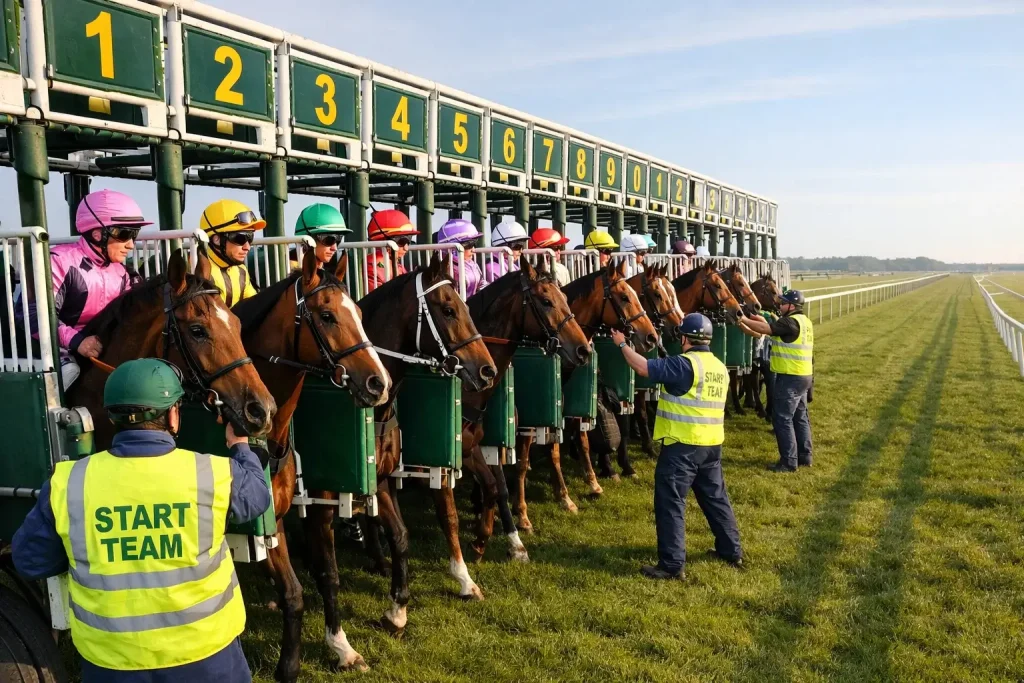
The Draw Debate in the 1000 Guineas
Before every 1000 Guineas, the same conversation surfaces. A punter scans the draw, sees her fancy has been allocated stall 14, and wonders whether it matters. The answer, as with most things in horse racing, is frustratingly nuanced: it matters sometimes, under certain conditions, and far less consistently than the raw numbers might suggest.
The 1000 Guineas is run on a straight mile, which theoretically eliminates the draw advantage that exists on turning tracks. There are no bends to negotiate, no inside rail to hug. Every filly runs roughly the same distance regardless of her stall number. And yet draw statistics do show patterns — or at least apparent patterns — that attract attention year after year. Separating genuine signal from statistical noise is the challenge, and getting it wrong can lead to poor betting decisions based on a variable that may not be as influential as it appears.
Historical Draw Statistics: Stall 1 Through High Numbers
The headline numbers tell a seductive story. Over the last 20 years of the 1000 Guineas, middle to low stalls have produced a slightly higher percentage of winners than high stalls. Stalls 1 through 6 have a broadly favourable record. Stalls in the mid-range — 7 through 10 — are close to expected. High stalls, from 11 upwards, have produced fewer winners than their share of runners would predict. If you stopped there, you might conclude that low draws win and high draws lose.
But the sample is small. Twenty runnings, with field sizes varying between 10 and 18, produce a data set that is vulnerable to individual results distorting the picture. A single winner from stall 1 in a year where only 10 runners started carries the same statistical weight as a winner from stall 1 in a year with 18 runners, even though the competitive context is entirely different. The apparent low-draw advantage is heavily influenced by a handful of results that may owe more to the quality of the horse in that stall than the stall itself.
Desert Flower, who won the 2026 1000 Guineas as the Evens favourite, was drawn in stall 6 — a middle berth in a field of 14. Minding, the last favourite to win (2016), broke from stall 4. Billesdon Brook, the 66/1 shock winner in 2018, came from stall 2. These results might suggest a low-draw advantage, but in each case the filly in question was either the best horse in the race (Desert Flower, Minding) or produced a career-best performance that owed more to talent and ride than to stall position (Billesdon Brook). The draw contributed, but it did not determine the outcome.
The more honest reading of the historical data is this: there is a weak tendency for lower-drawn horses to perform marginally better in the 1000 Guineas, but the effect is not strong enough to override form, class, or jockey skill. A filly drawn in stall 14 with superior form is a better bet than a filly drawn in stall 2 with inferior form, every time. The draw is a secondary variable, not a primary one.
Rail Movements and the Limitation of Draw Data
The reason the draw in the 1000 Guineas is so difficult to analyse with confidence is that the Rowley Mile is not a static course. Newmarket moves its rail position between meetings and sometimes between races on the same day. The rail can be placed on the far side, the stands’ side, or anywhere in between, and the ground available to runners shifts accordingly. A stall number that puts a filly near the favoured strip of ground in one year might put her on the worst ground the next, depending on where the rail has been set and how the going has been managed.
This means that historical draw data is, in a meaningful sense, comparing different courses. Stall 3 in a year when the rail is on the far side is not the same racing proposition as stall 3 in a year when the rail is on the stands’ side. Aggregating results across years without accounting for rail position produces statistics that look precise but lack genuine explanatory power. The numbers are real; the inference drawn from them is unreliable.
What matters more than stall number is where the best ground is on race day. If the ground has been watered on one side, or if sustained rain has softened one strip more than another, the jockeys will gravitate toward the firmer surface regardless of their starting position. William Buick, describing Desert Flower’s 2026 victory, noted how she organised herself coming out of The Dip and hit the rising ground with momentum — a comment about positioning and ground sense, not stall number. The winning time in the 1000 Guineas ranges from 1:34.22 on fast ground (Ghanaati, 2009) to 1:40.53 on softer going (Speciosa, 2006). That six-second spread tells you more about how conditions shape the race than any draw analysis ever could.
Practical Approach: Using Draw as a Filter, Not a Verdict
The sensible approach to the draw in the 1000 Guineas is to treat it as a minor filter in a multi-factor selection process, not as a standalone reason to back or oppose a runner.
Check the rail position first. If Newmarket has declared the rail on the far side, lower-drawn horses will be closer to it; if on the stands’ side, higher draws are better placed. This information is published on the morning of the race and is freely available. Factor it in alongside going conditions: if the ground is firmer on one side, the draw advantage tilts toward whichever stalls are closer to that strip.
Then assess whether the draw creates a tactical problem for any specific runner. A front-runner drawn widest in a large field may burn energy getting across to the rail. A hold-up filly drawn low may find herself boxed in if the pace is slow and the field bunches. These are race-specific considerations that depend on running style and jockey intent, not on historical averages.
If two runners are closely matched on form and you need a tiebreaker, the draw can serve that purpose. A filly with a slight draw advantage on the day — lower stall when the rail favours the far side, or a middle stall that gives tactical flexibility — can edge the decision. But if you find yourself backing a horse primarily because of her stall number, you have elevated a marginal factor above the variables that actually determine 1000 Guineas results: class, form, course experience, and the ability to handle The Dip.
The draw debate will continue before every renewal. Let it. The bettors who profit from the 1000 Guineas are the ones who assess the draw in context rather than in isolation, and who never allow a stall number to override what the form book is telling them.