
1000 Guineas 2026: Date, Time, Runners, and Early Market Overview
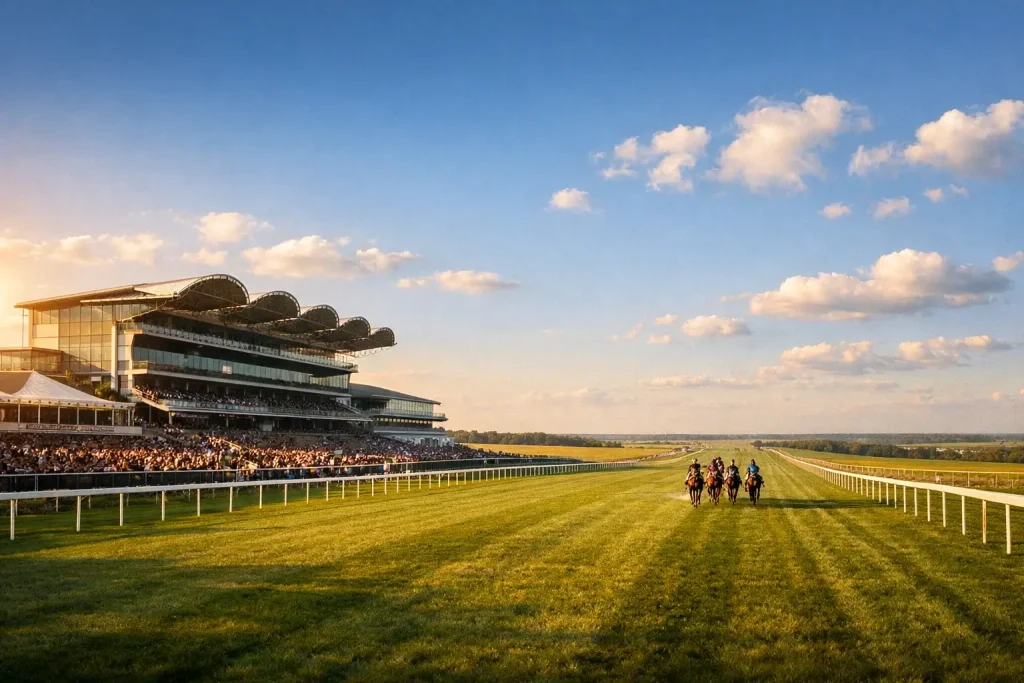
Everything Confirmed for the 2026 1000 Guineas
The 2026 1000 Guineas is locked in. Sunday, 3 May, Newmarket’s Rowley Mile, 15:35 BST. That much is certain. What remains fluid — as it does every year — is which fillies will line up, how the ante-post market will shake out in the weeks ahead, and whether the early money proves shrewd or naive once the stalls open.
For anyone planning their Classic-season betting early, the 1000 Guineas sits in a peculiar sweet spot. It is the first fillies-only Classic of the British flat season, which means it draws from a shallow pool of proven form. Most contenders will have raced just two or three times. Trial results trickle in through March and April, reshaping a market that often bears little resemblance to where it started in January. Last year’s prize fund reached a guaranteed £525,000, with the winner collecting north of £300,000, and there is no indication Betfred’s sponsorship will trim the purse for 2026. The commercial incentive for connections to target this race — both in prize money and residual breeding value — keeps the field competitive and the market volatile.
This guide covers the confirmed logistics, the early ante-post picture, and how the 2026 Classic season calendar shapes the build-up. It is not a tips page. It is a framework for making sense of the information that will arrive between now and the first Sunday in May.
Date, Time, Venue, and Broadcast
The 1000 Guineas will be run on Sunday, 3 May 2026, as the feature race on day two of the Guineas Festival at Newmarket. The post time is 15:35 BST. It follows the 2000 Guineas, which takes place on the Saturday — a scheduling pattern that has been standard since the early 2000s, when the Jockey Club shifted both Classics to the same weekend to create a festival atmosphere.
The venue is the Rowley Mile course at Newmarket, the same straight mile that has hosted this race since 1814. Unlike most British racecourses, the Rowley Mile is an entirely straight track, meaning there is no draw bias in the traditional sense — no bends to favour inside or outside positions. That said, the course does have its quirks, including a pronounced topographical dip roughly two furlongs from home followed by a stiff uphill finish. The terrain rewards stamina and balanced pace over raw speed, and it catches out horses who have never experienced it before.
Broadcast details for 2026 are yet to be formally confirmed, but ITV Racing has held the terrestrial rights to all five British Classics for several seasons and is expected to continue coverage. ITV’s main channel typically carries the race live, with extended build-up beginning after 13:00. For those outside the UK or without terrestrial access, Sky Sports Racing provides supplementary coverage, and most licensed bookmakers stream the race live to funded-account holders.
Tickets for the Guineas Festival go on sale through the Jockey Club’s official channels, usually from early in the new year. Enclosure options range from the Premier Enclosure — which includes access to the parade ring and winner’s enclosure — to more affordable general admission. Newmarket’s accessibility by road (the A14 corridor from Cambridge) and rail (Newmarket station is a short taxi ride from the course) makes it one of the easier Classics to attend in person.
Early Ante-Post Market and Key Contenders
At this stage of the season, the 1000 Guineas ante-post market is more sketch than portrait. A handful of names dominate the top of the betting based on juvenile form, breeding pedigree, and stable reputation, but the picture will shift significantly once the spring trials begin in earnest. The Nell Gwyn Stakes at Newmarket and the 1000 Guineas Trial at Leopardstown are the final major auditions, and both have a track record of either confirming or dismantling winter confidence.
What we can say with reasonable certainty is that the field will be competitive. According to the BHA’s 2026 Racing Report, the average field size at Premier flat meetings stood at 11.02 runners — marginally above the 10.86 recorded in the previous season. The 1000 Guineas, as one of the flagship Premier events, consistently attracts fields at or above that average, typically landing between 10 and 16 declared runners. A field of that size creates genuine market depth: enough runners to produce value each-way prices but not so many that the race degenerates into a lottery.
The big operations will be represented. Aidan O’Brien’s Ballydoyle has saddled more 1000 Guineas runners in the last two decades than any other yard, and his early-season entries tend to number three or four at this stage before being refined. Godolphin, who landed the 2026 edition with Desert Flower, will be keen to defend, and their Newmarket base gives them a natural advantage in readiness for the Rowley Mile. The Haggas, Gosden, and Stoute (now legacy) yards historically contribute at least one live contender between them.
For bettors, the ante-post market in March is a double-edged tool. Prices are at their most generous — you will never get a bigger price on a genuine contender than you will right now — but the risk of non-runners is real. Fillies at this stage of their careers are fragile athletes. Setbacks in training, disappointing trial runs, or strategic rerouting to the Oaks can all turn a well-backed ante-post selection into dead money. Non-Runner No Bet markets mitigate some of that risk but typically offer shorter odds in return.
How the 2026 Classic Season Calendar Fits Together
The 1000 Guineas does not exist in isolation. It is the second of five British Classics and the first act in a fillies-specific narrative that extends through the Oaks at Epsom in early June and, for a rare few, into the St Leger at Doncaster in September. Understanding where it sits in the calendar matters because it affects which fillies are targeted at the race and how trainers time their preparation.
The 2000 Guineas on Saturday, 2 May, acts as the weekend’s opening salvo and often influences late betting on the fillies’ race. If a dominant performance emerges from the colts’ Classic, it can recalibrate expectations about what constitutes a strong performance over the Rowley Mile that weekend — going conditions, pace dynamics, and winning time all become reference points within 24 hours.
After the Guineas Festival, the Classic trail moves to York’s Dante meeting in mid-May, which serves primarily as an Oaks and Derby trial. The Musidora Stakes at York is the key stepping stone for fillies aiming at Epsom, and it is here that 1000 Guineas runners often reappear — or, in some cases, fail to frank their Newmarket form. By late May, attention shifts to the Oaks itself, and bettors who have followed the 1000 Guineas closely hold an informational edge in that market.
Royal Ascot in mid-June then offers the Coronation Stakes, a Group 1 over a mile that has become the de facto rematch race for the best of the Guineas generation. Five of the last ten Coronation Stakes winners ran in the 1000 Guineas earlier that season. For bettors with a longer horizon, tracking how the Guineas field disperses across these subsequent targets is where the real post-race value lies.
The calendar, in short, turns the 1000 Guineas into both an end in itself and a starting gun. Bet the race on its own merits, but keep one eye on what comes next.