
Desert Flower 2026: A Case Study for Analysing the 2027 1000 Guineas Favourite
 Available in US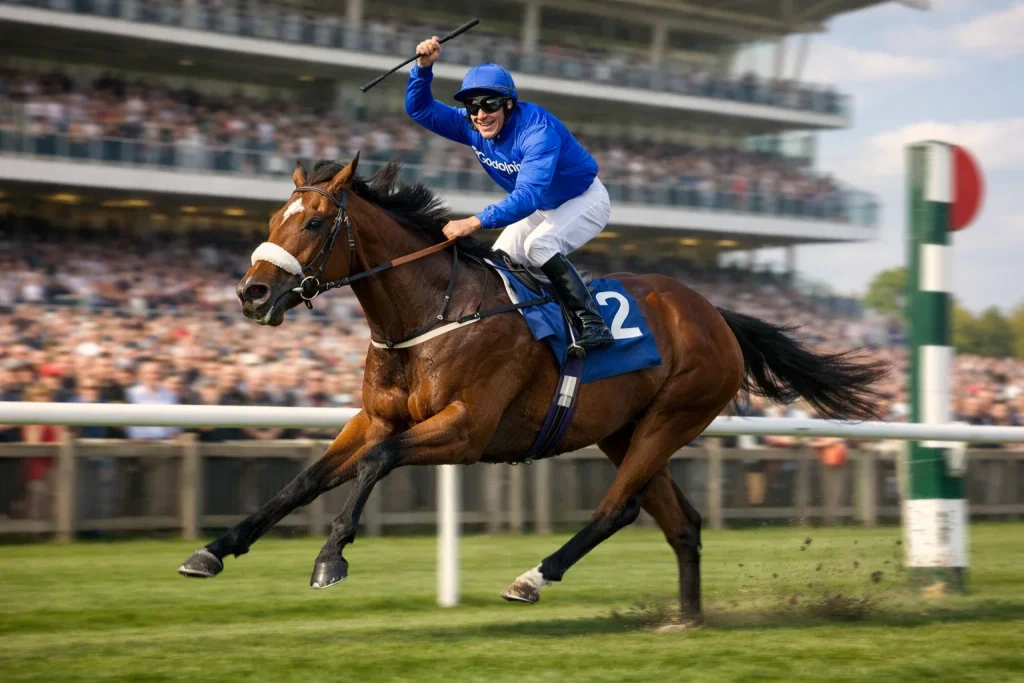
Why Desert Flower Remains the Template for Classic Analysis
Desert Flower’s victory in the 2026 1000 Guineas was not a shock. She was the Evens favourite, the best-backed filly in the race, and she delivered exactly what the market expected. But the value of her story for bettors looking ahead to 2027 is not the result — it is the process that led to the result. Desert Flower’s path from juvenile debut to Classic glory provides a template for analysing whichever filly emerges as the 1000 Guineas favourite next spring: the breeding cues, the form progression, the market signals, and the race-day execution that, taken together, distinguish a genuine Classic filly from a hype-inflated one.
Every spring, one filly emerges as the market leader for the 1000 Guineas. Some justify the confidence. Most do not — the historical favourite strike rate confirms that the market’s top pick loses more often than she wins. Desert Flower was the exception, not the rule. Understanding why she succeeded where others have failed, and what her case reveals about the variables that matter most, is the analytical exercise that sharpens your approach to the 2027 Classic — and to every future one.
Her preparation ran through the Guineas trials.
The Profile: Breeding, Form, and an Unbeaten Record
Desert Flower was trained by Charlie Appleby for Godolphin, ridden by William Buick, and sired by Night Of Thunder out of a Dubawi mare. Her breeding was notable not for conforming to the Galileo template that dominated 1000 Guineas winners between 2016 and 2020, but for departing from it. Night Of Thunder, a Group 1-winning miler himself, represented a newer sire line that had been building its Classic credentials without the established dominance of Galileo or Frankel. Her dam-sire, Dubawi, contributed stamina and class. The combination produced a filly with the speed for a mile and the constitution to handle the demands of a Classic campaign.
Her form was, by 1000 Guineas standards, unusually strong. She was unbeaten in her three starts as a two-year-old, winning a maiden, a Group 3, and a Group 1 — the Fillies’ Mile at Newmarket in October. That final juvenile start was the critical qualification: she had proven she could handle the Rowley Mile at Group 1 level, and she had done so without being fully extended. Desert Flower became the first unbeaten 1000 Guineas winner since Attraction in 2004, a gap of 21 years that underlines how rare it is for a filly to arrive at the Classic with a perfect record intact.
The breeding context is significant for 2027 analysis. Galileo, who dominated the sire table for 1000 Guineas winners in the late 2010s, died in 2021. His influence is fading as his daughters age out of the Classic population and newer sire lines — Night Of Thunder, Kingman, No Nay Never — take over. Desert Flower’s victory signals a shift in the breeding landscape that bettors should factor into their sire analysis for the 2027 renewal. The next 1000 Guineas favourite is unlikely to be by Galileo; she is more likely to carry a sire profile that resembles Desert Flower’s. Bettors who adjust their sire analysis to reflect this transition will be pricing the field more accurately than those still anchored to the Galileo era.
Market Movement: How Odds Shifted Through the Season
Desert Flower’s ante-post journey illustrates how the market processes information in the Classic cycle. After her Fillies’ Mile victory in October 2025, she was installed as the clear ante-post favourite for the 1000 Guineas at around 3/1. Through the winter, with no racing and only stable reports to guide the market, her price shortened gradually as no credible challenger emerged. By the time the spring trial season began in March, she was trading at 2/1 or shorter.
The critical ante-post window was the period between mid-March and late April. Desert Flower did not run a spring trial — Appleby chose to go straight to the Guineas from her juvenile form, a decision that signalled confidence but also created uncertainty. Without a trial to confirm her wellbeing, the market had to rely on stable reports and work-morning observations. The price held around 2/1 during this period, reflecting the market’s trust in Appleby’s judgement but also the inherent risk of backing a filly who had not been seen on a racecourse for seven months.
On race day, Desert Flower was sent off at Evens — the shortest-priced 1000 Guineas favourite in several years. Her winning time of 1:36.81 on good to firm ground placed her toward the faster end of the modern spectrum without being exceptional. It was a thoroughly professional performance rather than a spectacular one, and the closeness of the finish — Flight and Simmering finished second and third at relatively short distances — confirmed that even an unbeaten favourite is beatable on the day.
Applying the Template: Who Fits It for 2027?
With Desert Flower’s case study in mind, the question for 2027 is straightforward: which filly currently on the ante-post board matches her profile most closely? The answer, as of September 2026, is that no single filly has yet established the same commanding position Desert Flower held going into winter. The autumn juvenile races — the Cheveley Park Stakes on 26 September and the Fillies’ Mile in early October — will settle much of the debate, but several names are already circulating.
From the Ballydoyle camp, Sun Goddess has emerged as the early ante-post favourite at around 8/1 to 10/1. A daughter of Sioux Nation, she became the first Ballydoyle-based filly to win the Group 1 Phoenix Stakes at the Curragh in August, and followed up with a devastating display in the Goffs Harry’s Half Million at York. Aidan O’Brien has indicated she may step up to seven furlongs for the Moyglare Stud Stakes before potentially heading to the Cheveley Park Stakes. Crucially, she has not yet won over a mile — the distance question that Desert Flower answered emphatically in the Fillies’ Mile is still open for Sun Goddess.
A second Ballydoyle filly, Victorious, was as short as 9/1 for the Guineas after winning the Queen Mary Stakes at Royal Ascot, but she suffered a setback after that run and O’Brien has indicated she may not race again in 2026. Her talent is not in doubt — O’Brien rated her “very special” — but whether she can return in time for a Classic campaign is an open question. Fillies recovering from setbacks are high-risk investments at this stage, and the Desert Flower template would flag her as a vulnerability: no confirmed autumn form, no mile experience, and a long absence to overcome.
Beyond Ballydoyle, the picture is inevitably less defined. Godolphin will be represented — Appleby does not leave the 1000 Guineas to chance, and the Moulton Paddocks yard will have a filly or two targeted at the race — but their leading juvenile fillies have not yet separated themselves from the pack. The Haggas and Gosden yards historically contribute at least one live contender between them, and the Cheveley Park Stakes and Fillies’ Mile in September and October will introduce or confirm the leading names from those operations.
The key analytical exercise for the next eight weeks is to apply the Desert Flower checklist to each emerging contender. Does she have Group 1 juvenile form? Has she won at Newmarket? Is she by a sire whose stock handles the Rowley Mile? Has she been given a preparation that signals confidence rather than caution? Does her ante-post price offer value relative to her proven ability, or is the market already pricing her as a certainty?
As of now, no filly answers all five questions affirmatively. That is normal for early September. By the end of October, one or two will — and the market will have moved.
The wider context is set out in our 1000 Guineas betting guide.
Lessons for Analysing the 2027 1000 Guineas Favourite
Desert Flower’s case teaches five lessons that apply to any future 1000 Guineas favourite, including whoever emerges for 2027.
First, breeding matters, but the dominant sire line shifts over time. Do not assume that what worked in 2016–2020 (Galileo) will work in 2027 and beyond. Track the emerging sires and be prepared to back fillies from newer lines at longer odds before the market catches up. Night Of Thunder, Sioux Nation, Kingman — these are the names to watch for the 2027 favourite, not Galileo.
Second, course experience is the strongest single predictor. Desert Flower had won at Newmarket; nine of the last 12 winners had run there previously. A favourite without Rowley Mile form is a riskier proposition, regardless of her talent. Sun Goddess, the current 2027 favourite, has won at the Curragh and York but not at Newmarket. The Fillies’ Mile in October will be the test.
Third, the absence of a spring trial is a double-edged signal. It suggests confidence from the trainer, but it removes a data point that the market needs to price accurately. If a favourite skips her trial and drifts in the ante-post market, the drift may represent value — or it may reflect a genuine concern that the market is detecting. Assessing which requires judgement, not just data.
Fourth, the price matters more than the narrative. Desert Flower at 3/1 in November 2025 was a different bet from Desert Flower at Evens on race day. The form did not change; the price did. The value was in the early market, not the final market. Waiting for certainty costs you the price. For 2027, the fillies currently trading at 8/1 to 12/1 may look very different by April — and the prices will reflect that.
Fifth, even the strongest favourite can be pushed close. Desert Flower won, but she did not win by daylight. Flight and Simmering finished within touching distance. The 1000 Guineas remains a competitive, unpredictable race even when the market identifies the right horse. Building your approach around this reality — accepting that the favourite paradox applies even to the best — is the foundation of profitable Classic betting in any year and with any favourite.
