
1000 Guineas Day Races: Betting on the Full Newmarket Card
 Available in US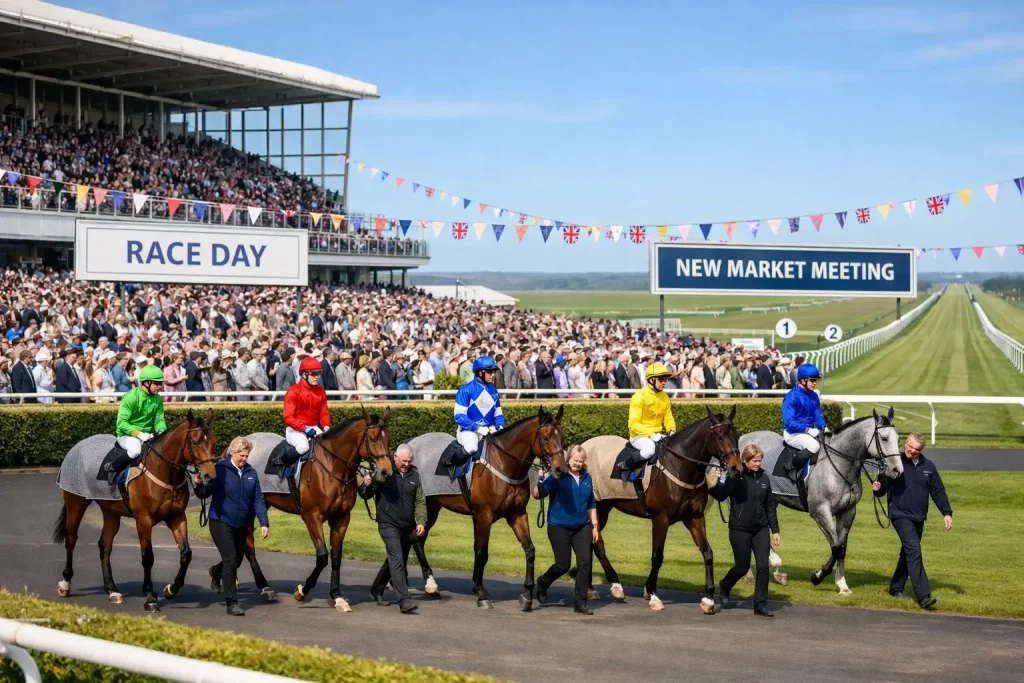
More Than Just the Classic — The Full Guineas Day Experience
The 1000 Guineas is the headline act, but it is not the only race worth betting on. Guineas day at Newmarket typically features a card of six or seven races, several of which are high-quality Pattern contests in their own right. For bettors, the supporting card offers opportunities that the Classic itself cannot always provide: smaller fields, more predictable form, and — occasionally — information that feeds directly into your 1000 Guineas analysis.
Treating the full card as a single betting event rather than a series of disconnected races is a smarter approach than fixating on the Classic alone. The supporting races have their own form profiles, their own market dynamics, and their own each-way angles. A disciplined bettor can find more cumulative value across the undercard than in a single high-profile wager on the 1000 Guineas favourite.
Getting there is covered in the Guineas Festival guide.
The Supporting Card: Key Races and Their Relevance
The Guineas Festival supporting card varies slightly from year to year, but several races appear consistently and carry genuine significance for both the form book and the betting market.
The Dahlia Stakes, a Group 2 over nine furlongs for fillies and mares aged four and older, is typically the most informative supporting race from a 1000 Guineas perspective. It is run on the same course, on the same afternoon, and provides a live reading of how the ground is riding and where the best surface is. Jockeys who ride in the Dahlia Stakes before the Classic carry course intelligence from that race into the 1000 Guineas — they know which part of the track is fastest, how the wind is affecting the finish, and how The Dip is playing. If a Dahlia Stakes winner comes from a prominent position near the stands’ rail, it suggests that strip of ground is favourable, and 1000 Guineas runners drawn to that side may benefit.
The Palace House Stakes, a Group 3 five-furlong sprint, occupies a different niche but serves the wider betting ecosystem. Sprint form from the Guineas Festival feeds into the ante-post markets for Royal Ascot, and a Palace House winner often becomes the market leader for the King Charles III Stakes six weeks later. Bettors who are active across the flat season can use the Palace House result as a starting point for their Ascot sprint analysis — and if the winner is available at a longer ante-post price before the Guineas day form is absorbed by the market, there is immediate value to be captured.
Listed and handicap contests on the undercard also serve as form references. Young fillies running in these supporting races may reappear in future Pattern events, and their performances provide data points for the wider form book. A maiden filly who wins impressively on Guineas day at Newmarket immediately enters the conversation for autumn targets and, potentially, the following year’s Classic generation. The quality of the undercard at a Premier meeting ensures that even the lower-tier races attract competitive fields worth analysing.
The total prize money across the card reflects the quality on offer. British racing’s total prize fund reached a record £194.7 million in 2026, and Premier meetings like the Guineas Festival command a disproportionate share of that pot. The supporting races at Newmarket are not afterthoughts — they attract competitive fields from top yards, and the form they produce is meaningful for months afterward.
The wider context is set out in our 1000 Guineas betting guide.
Multi-Race Strategies for 1000 Guineas Day
A multi-race betting strategy for Guineas day starts with bankroll allocation. Rather than placing your entire day’s budget on the 1000 Guineas, divide it across the card based on where you have the strongest opinions. If you have a well-researched view on the Dahlia Stakes and a speculative each-way selection in the Classic, weight the staking accordingly. The discipline of spreading your action across several races reduces the variance of a single-event day and increases the probability of a positive return overall.
Accumulators and multi-race bets are popular on Guineas day but require caution. A four-race accumulator across the card might look tempting at combined odds of 50/1, but each additional leg multiplies the probability of failure. In fields that average around 11 runners — the 2026 BHA Racing Report recorded an average Premier meeting field size of 11.02 — the probability of selecting four consecutive winners is low enough that accumulators should be treated as recreational bets rather than strategic ones. If you do build an accumulator, keep the stakes modest and ensure each leg stands on its own analytical merit.
In-running betting adds another dimension on Guineas day for those watching the ITV Racing broadcast or the live stream. The earlier races provide a live calibration of the course conditions, and bettors who are watching attentively can adjust their 1000 Guineas positions right up to the off. If the earlier races suggest that hold-up horses are struggling on soft ground, a front-running 1000 Guineas selection becomes more attractive. If front-runners are dominating on quick ground, a filly drawn on the favoured strip with prominent tactical speed gains an edge. This real-time information flow is one of the biggest advantages of treating the full card as a connected event.
One approach that works well on major festival days is the reserve fund. Allocate a portion of your daily budget — perhaps 20 to 25% — as a reserve that you commit only if the earlier races provide compelling information. If the Dahlia Stakes suggests that the ground is riding differently from expected, or if a jockey who rides in the Classic has shown a particular tactical approach in an earlier race, the reserve fund gives you the flexibility to act on that intelligence without overcommitting before the information was available. Rigid pre-race betting plans do not account for what happens on the day. A reserve fund does.
How Supporting Races Inform the Classic
The relationship between the supporting card and the 1000 Guineas is not just about going and track conditions. It extends to trainer and jockey form on the day. If a trainer saddles a winner in an earlier race, the confidence flowing through that yard into the Classic can be tangible. Jockeys who have already won on the card arrive at the 1000 Guineas with rhythm, course knowledge refreshed, and the psychological momentum of success.
Conversely, a jockey who has struggled through three losing rides before the Classic may approach the race with less confidence, and the subtle effect on riding decisions — committing a fraction too early or too late — can influence the outcome in a tight finish. These are marginal factors, not determinative ones. But in a race where the margins are often a neck or a head, marginal factors accumulate.
The full Guineas day card is, in the end, a single afternoon of racing at Newmarket. Each race adds information. Each result adjusts the probabilities. The bettor who uses the full card as an integrated analytical and betting opportunity — rather than ignoring everything except the 3:35 — is playing the day more intelligently, and over a series of Guineas Festivals, that intelligence compounds into an edge.
